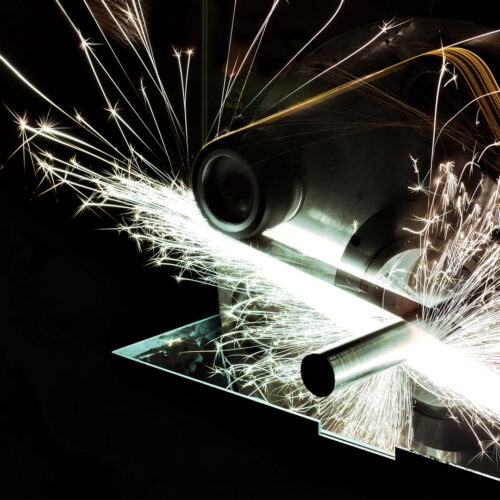
Garboli mirror polishing machines develop a bright, highly reflective finish on metal tubes and selected bars. The portfolio includes dedicated configurations for straight and bent tubes, with selected straight-workpiece arrangements for bars. The starting surface, material and workpiece geometry determine the preparation and polishing sequence.
All Mirror Polishing machines
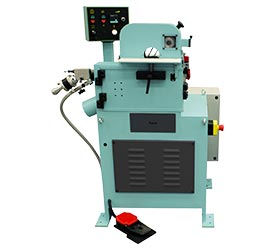
LPC 160 Mirror
 Mirror polishing machines
LPC 160 Mirror
Orbital belt buffing machine
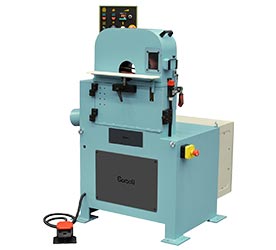
LPC 300 Mirror
 Mirror polishing machines
LPC 300 Mirror
Orbital polisher
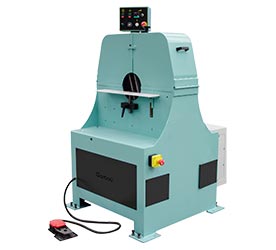
LPC 500 Mirror
 Mirror polishing machines
LPC 500 Mirror
Orbital polisher
LT 130 Mirror
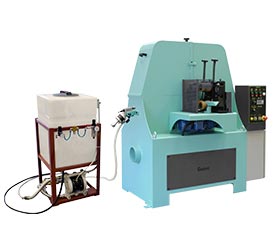 Mirror polishing machines
LT 130 Mirror
Mirror polishing machine for straight tubes
LT 200 Mirror
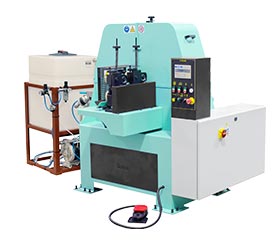 Mirror polishing machines
LT 200 Mirror
Planetary tube buffing machine
Preparing the surface for a mirror finish
Grinding and preliminary finishing may remove marks before the final polishing stage. Dedicated belts and polishing compounds are used where the configuration provides them. Preparation and final polishing have different functions; a mirror result should not be assumed from a standard satin-finishing machine.
Suitable orbital arrangements work around round or oval tube sections. Compatibility with bent tubes or other sections depends on the machine specifications and available workpiece clearance. The permissible diameter and bend geometry must be checked for the intended component.
Working ranges and powered feed
Available configurations include working ranges of 5–50 mm and 20–219 mm in tube diameter. These describe separate machines, not the limits of every model. Selected powered-feed arrangements for straight tubes provide adjustable feed of 1–20 m/min. The suitable operating rate depends on the material, incoming surface and required finish.
Controlled feed maintains the workpiece path through the polishing area. The preparation, tools and feed settings are chosen together to develop the specified appearance along the tube. Polishing equipment and paste dispensing depend on the configuration.
Choosing by geometry and finish
The applications include stainless steel, steel and brass, with aluminium covered by selected configurations. Tube diameter, section, length, curvature and required appearance determine suitability. Selected straight-workpiece configurations also polish metal bars, with the working range set by the machine and bar dimensions. Garboli Range mirror polishing machines describe the corresponding line; bent-tube applications provide the geometry-specific route.
Metal finishing machines cover the wider family of satin and polished surface results. Contact Garboli with the material, tube dimensions and finish specification to discuss the appropriate mirror-polishing arrangement.
Frequently asked questions
A satin finish has a defined surface texture. A mirror finish is bright and highly reflective and requires suitable preparation and polishing equipment.
Yes, with a dedicated compatible configuration. Tube dimensions, bend geometry and incoming surface condition determine suitability.
No. Belts and compound-dispensing equipment depend on the configuration and required finish.
The line includes compact orbital configurations for Ø5–50 mm tubes and larger arrangements with working ranges reaching Ø20–219 mm. Powered-feed solutions for straight tubes operate at adjustable speeds of 1–20 m/min.