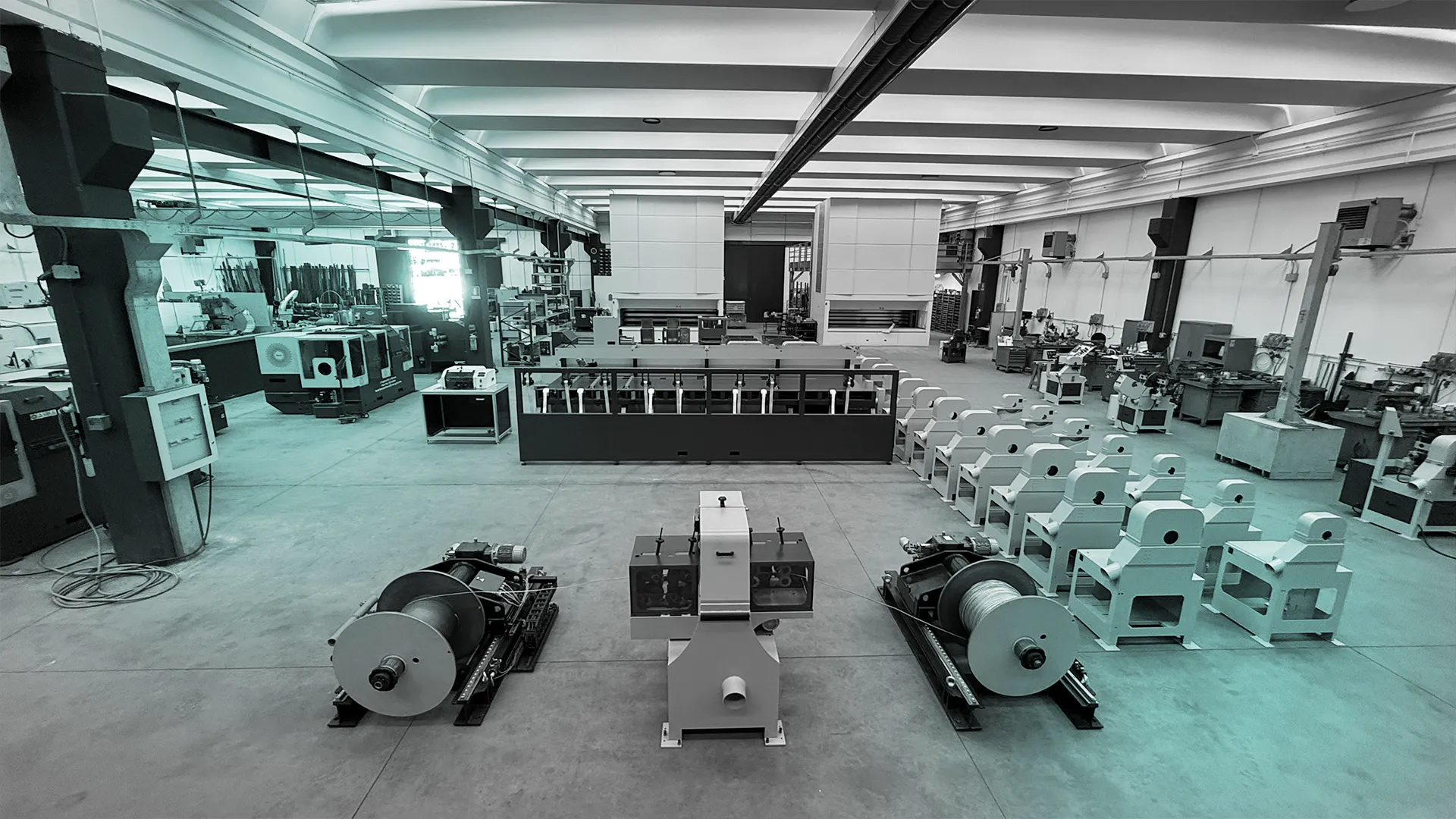
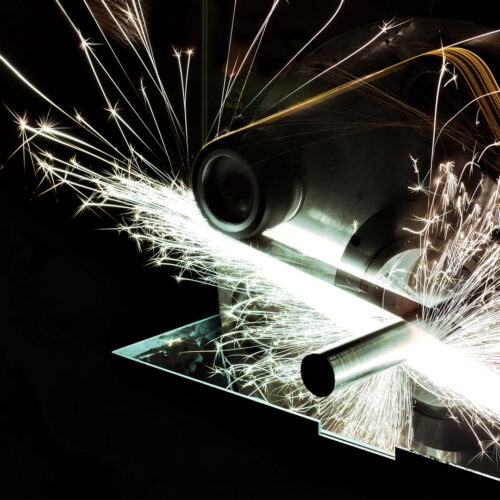
Irregular shapes
Garboli Range includes solutions for deburring the ends of tubes and profiles with irregular cross-sections. Dedicated brush contact removes burrs from internal and external cut edges. The term irregular profile identifies the section to be held and presented; it does not imply that one machine finishes the entire surface of any shaped component.
ROTOR 200 WET
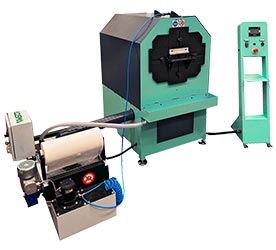 ROTOR 200 WET
APM LOADER
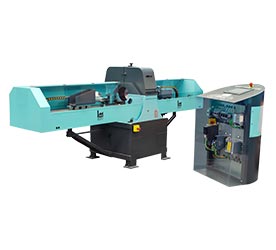 Grinding machines
APM LOADER
Front feed and holding table
APN LOADER
Grinding machines
APN LOADER
Front APN feed system
Deburring the cut perimeter
An irregular cross-section may contain corners and transitions that affect contact at the cut end. The required operation is to remove the burr while respecting the specified edge condition. Section dimensions, wall thickness, cut angle and material determine whether an end-deburring configuration is suitable.
End treatment and handling have different roles
Feeding and holding equipment positions the workpiece relative to a separate working unit. It does not itself provide surface finishing. If the part also requires grinding or satin finishing along its length, that operation needs an appropriate surface-treatment configuration. The general irregular-profile section explains the wider application, while Garboli Range deburring machines focus on burr removal.
For regular flat-faced sections, see the Garboli Range square and rectangular profile application. Send Garboli a drawing, dimensions and the required edge condition to discuss equipment for your irregular-profile ends.
Frequently asked questions
It removes cutting burrs from the internal and external edges at the end of a compatible tube or profile with an irregular cross-section.
No. End deburring treats the cut perimeter. Grinding or finishing along the workpiece length requires an appropriate, separately specified surface-treatment configuration.
No. A feeding or holding unit positions the workpiece. A separate working unit performs the specified deburring or surface operation.